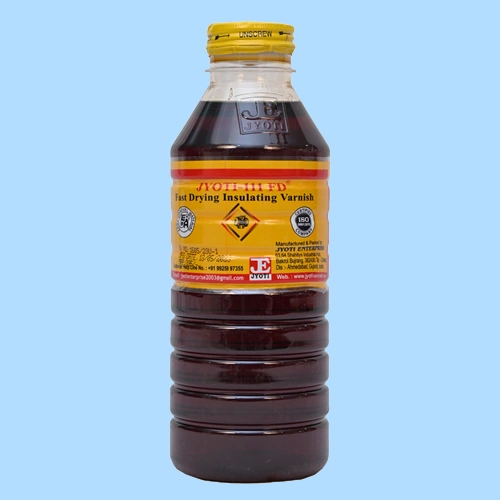
Synthetic Thinner Manufacturer
Enamel paint and alkyd or melamine resin-based paint or varnish requires a particular solvent compatible with its own resin system and cannot be expected to use a universal solvent drawn from another coating system. Our Synthetic Thinner is particularly intended for this purpose, providing a means by which synthetic resin-based paints or varnish can achieve the right viscosity free of problems in film formation or drying.
As our entire range of products includes alkyd, phenolic, melamine, and urea formaldehyde synthetic resin-based systems, our thinner is particularly adapted to that resin system.
Special Key Features
What sets a good insulating varnish apart isn't just that it dries it’s how the cured film behaves afterward. Our air drying formulations offer:
Formulated specifically for synthetic enamel
Formulated specifically for synthetic enamel and resin-based coating systems
Compatible with alkyd, phenolic, and melamine
Compatible with alkyd, phenolic, and melamine resin chemistries
Reduces viscosity cleanly for spray, brush,
Reduces viscosity cleanly for spray, brush, or dip application
Supports even film formation without disrupting
Supports even film formation without disrupting resin cure behavior
Suitable for both industrial and general-purpose
Suitable for both industrial and general-purpose synthetic paint systems
Tested for thermal endurance and long-term
Tested for thermal endurance and long-term durability
Application Method
Synthetic Thinner is introduced into the paint or varnish gradually while stirring to maintain its homogeneity and prevent separation of the resin and pigment parts during thinning process. The precise proportion of this material is determined by the desired viscosity level required for the applied coating type.
Since synthetic resin systems vary somewhat in their solvent tolerance, it's worth checking the technical data sheet for the specific paint or varnish grade before thinning heavily, particularly for pigmented systems where over-thinning can affect color consistency and coverage.
Specifications
Formulated as a diluent compatible with alkyd, phenolic, and melamine resin-based synthetic coatings. Exact mixing ratios depend on the target viscosity and the specific synthetic paint or varnish product being thinned, and are available through our technical data sheets on request.
| Thermal Class | Class B (130°C), F-Class & H-Class Available |
|---|---|
| Resin Foundation | Phenolic Resin-Based Formulations |
| Curing Mechanism | Room Temperature Air Drying (Heat Optional) |
| Operating Climate | Typically 0°C to 55°C Ambient Range |
| Available Shades | Clear, Golden, Amber Shades |
Uses & Applications
This varnish range is used extensively as a finishing, impregnating, and protective coating across a wide set of electrical applications, including:
Reducing viscosity of synthetic enamel paints
Reducing viscosity of synthetic enamel paints for spray or brush application
Thinning alkyd, phenolic, and melamine resin-based
Thinning alkyd, phenolic, and melamine resin-based coatings
Restoring proper viscosity to synthetic paint
Restoring proper viscosity to synthetic paint systems that have thickened during storage
General protective coating for industrial equipment
General protective coating for industrial equipment
General protective coating for industrial equipment
General protective coating for industrial equipment
Across all these applications, the core job stays the same — shielding sensitive electrical parts from moisture, chemical exposure, and the general wear of daily operating conditions.
Why Choose Us
Coatings made from synthetic resins may exhibit unpredictable behavior in cases where they are mixed with an incompatible solvent, manifesting themselves through improper flow, lack of uniformity in color, or delayed drying time. The Synthetic Thinner we offer was designed to work best with our range of resins, providing you with a true diluent.
That compatibility, backed by decades of resin and coatings manufacturing experience, is why this thinner remains a practical companion product for anyone working with our synthetic resin-based paint range.
Trusted by Leading Names
Proven across critical applications in power, railways, defense and manufacturing: