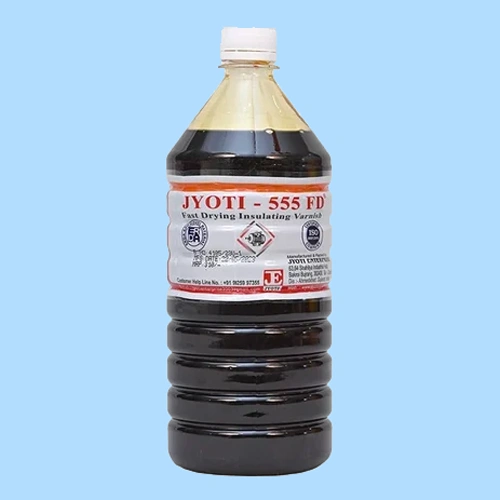
Electrical Insulating Varnish Manufacturer
Electrical failures rarely announce themselves in advance. More often, they trace back to something small — a coil that wasn't properly insulated, a component left exposed to moisture it was never protected against. That's the gap our electrical insulating varnish exists to close.
We've spent over three decades manufacturing insulating varnish formulations built specifically for electrical energy insulation, applied as a protective coating on motors, transformers, and electrical components to keep them stable through daily operating stress. Rather than treating insulation as an afterthought, our formulations are engineered from the ground up to prevent electrical failures across power transmission systems and rotating equipment.
Special Key Features
What sets a good insulating varnish apart isn't just that it dries it’s how the cured film behaves afterward. Our air drying formulations offer:
Strong resistance to chemicals, moisture, acids,
Strong resistance to chemicals, moisture, acids, and alkalis
High dielectric strength suited to electrical
High dielectric strength suited to electrical insulation requirements
Quick-drying formulation preferred across automation industries
Quick-drying formulation preferred across automation industries
Stable performance under high operating temperatures
Stable performance under high operating temperatures
Long-term durability with resistance to wear
Long-term durability with resistance to wear and corrosion
Reliable adhesion to metal coils, windings,
Reliable adhesion to metal coils, windings, and components
Application Method
This varnish is generally applied as a coating over electrical components, using methods like dipping, brushing, or spraying depending on the geometry and scale of the equipment involved. Once applied, the varnish forms a protective film that shields the underlying metal or winding from reactive elements — acids, alkalis, moisture, and general chemical exposure that would otherwise degrade performance over time.
Application should account for even coverage, particularly around joints and coil windings, since gaps in coating are typically where insulation failures eventually start.
Specifications
Formulations are built for strong dielectric behavior and thermal stability appropriate to electrical insulation use, with resistance to common industrial reactive agents. Specific viscosity, drying time, and thermal class details vary by grade and are available on request through our technical data sheets.
| Thermal Class | Class B (130°C), F-Class & H-Class Available |
|---|---|
| Resin Foundation | Phenolic Resin-Based Formulations |
| Curing Mechanism | Room Temperature Air Drying (Heat Optional) |
| Operating Climate | Typically 0°C to 55°C Ambient Range |
| Available Shades | Clear, Golden, Amber Shades |
Uses & Applications
This varnish range is used extensively as a finishing, impregnating, and protective coating across a wide set of electrical applications, including:
Electric motors and motor components
Electric motors and motor components
Power transmission drives and transformers
Power transmission drives and transformers
Coils and windings requiring chemical
Coils and windings requiring chemical and moisture protection
Automation industry equipment requiring quick-drying insulation
Automation industry equipment requiring quick-drying insulation
General electrical components exposed to variable
General electrical components exposed to variable operating conditions
Across all these applications, the core job stays the same — shielding sensitive electrical parts from moisture, chemical exposure, and the general wear of daily operating conditions.
Why Choose Us
We're large-scale manufacturers of electrical insulating varnish, and our formulations are trusted precisely because they don't cut corners on raw material quality. Every batch goes through controlled Quality Controls to ensure flexibility and consistency of use, because a varnish that performs differently from batch to batch isn't something manufacturers can build reliable equipment around.
Our client base reflects that consistency — organizations like NTPC, Indian Railways, Coal India, Polycab, and HAL have relied on our electrical insulating varnish for equipment where insulation failure simply isn't an acceptable risk. We offer these varnishes at competitive rates without compromising on the testing and quality assurance that back every drum we ship.
Trusted by Leading Names
Proven across critical applications in power, railways, defense and manufacturing: