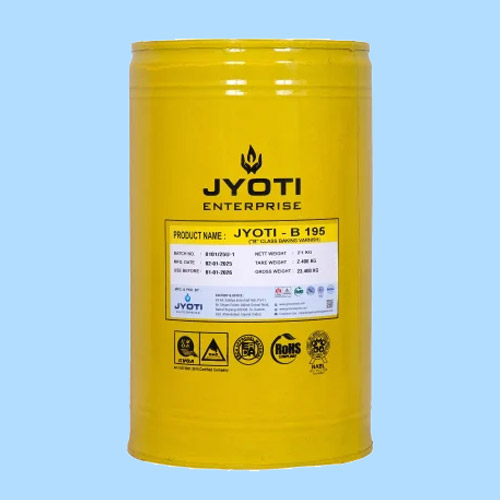
Baking Impregnating Varnish Manufacturer
Some electrical components don't just sit still — they spin, vibrate, and take on centrifugal stress hour after hour. A varnish that merely coats a surface won't hold up there; it needs to actually penetrate the winding and bond from the inside out. That's exactly what our baking impregnating varnish range is engineered to do.
Unlike air drying varnishes, these formulations are cured through controlled heat, typically alkyd or phenolic resin-based, and available across B-Class, F-Class, H-Class, and C-Class (silicone-based) thermal ratings. The result is a cured film with considerably more rigidity and bonding strength than an air-cured coating, which matters a great deal when the component it's protecting is spinning at high RPM inside a rotor or motor housing.
Special Key Features
What sets a good insulating varnish apart isn't just that it dries it’s how the cured film behaves afterward. Our air drying formulations offer:
High build and extra-strong bonding performance
High build and extra-strong bonding performance once cured
Greater flexibility and toughness compared
Greater flexibility and toughness compared to standard coatings
Resistance to mild acids, alkalis, chemicals,
Resistance to mild acids, alkalis, chemicals, and hot transformer oils
Suitable for use in explosion-proof electrical
Suitable for use in explosion-proof electrical equipment
Available across B, F, H,
Available across B, F, H, and C thermal insulation classes
Rigid enough to withstand high rotational
Rigid enough to withstand high rotational speeds without distortion
Application Method
Baking impregnating varnish is typically applied by dipping, though vacuum pressure impregnation (VPI) is also used for components requiring deeper penetration into winding gaps. Once applied, the coated component goes through a controlled baking cycle in an oven, where the heat cures the varnish into a hard, bonded film.
This baking step is what separates it from air drying varnish — the heat allows the resin to cure more completely, producing a film that's noticeably tougher and better bonded to the winding surface. Bake temperature and duration vary by thermal class and should follow the specific product's data sheet for best results.
Specifications
All grades of these products are designated for Thermal Class B (max 130°C) but also exist in F-Class, H-Class, and C-Class (based on silicones) versions for higher temperature applications. Viscosity, solids content, and bake schedule for specific grades can be provided upon request.
| Thermal Class | Class B (130°C), F-Class & H-Class Available |
|---|---|
| Resin Foundation | Phenolic Resin-Based Formulations |
| Curing Mechanism | Room Temperature Air Drying (Heat Optional) |
| Operating Climate | Typically 0°C to 55°C Ambient Range |
| Available Shades | Clear, Golden, Amber Shades |
Uses & Applications
This varnish range is used extensively as a finishing, impregnating, and protective coating across a wide set of electrical applications, including:
Impregnation of motor and transformer coil
Impregnation of motor and transformer coil windings
High-speed rotors in electrical hand tools
High-speed rotors in electrical hand tools and kitchen appliances
Vacuum cleaner motors and locomotive motor
Vacuum cleaner motors and locomotive motor windings
Equipment exposed to frequent mechanical vibration
Equipment exposed to frequent mechanical vibration and centrifugal stress
High-voltage machines operating in humid
High-voltage machines operating in humid or tropical conditions
Across all these applications, the core job stays the same — shielding sensitive electrical parts from moisture, chemical exposure, and the general wear of daily operating conditions.
Why Choose Us
Baking varnish has to perform under pressure — literally. An unwrapped winding that is not suitably bonded may deform or even break under rotational strain, something no producer of motors, transformers, or fast spinning rotors would like to happen. We develop our products with thirty years of experience in production from Ahmedabad and we test our varnish batches in our own lab prior to delivery to the customer on the criteria of bonding, chemistry and heat resistance.
It is one of the reasons why companies such as NTPC, Indian Railways, Coal India, and HAL choose our varnish for their applications.
Trusted by Leading Names
Proven across critical applications in power, railways, defense and manufacturing: