Quality Control
Quality Assurance
A varnish can look fine coming out of a drum and still fail six months later on a motor winding somewhere. That gap between "looks right" and "performs right" is exactly why quality control isn't treated as a final checkbox in our process — it runs through every stage of manufacturing, from the raw material that enters our facility to the finished insulating varnish that leaves it.
Testing Starts Before the Batch Even Begins
Most quality issues in varnish manufacturing don't originate at the finishing stage — they start with inconsistent raw materials. That's why each of our raw materials is tested at the quality control lab prior to being added to any manufacturing process. In the event that there is even one resin, solvent, or additive that fails to satisfy our standards, it will not be included in the mixture.
From there, we don't just wait for the final product to check quality. Intermediate stages get tested too, which means issues get caught while there's still room to correct them, rather than after an entire batch has already been finished and packed.
Why This Matters for Electrical & Industrial Applications
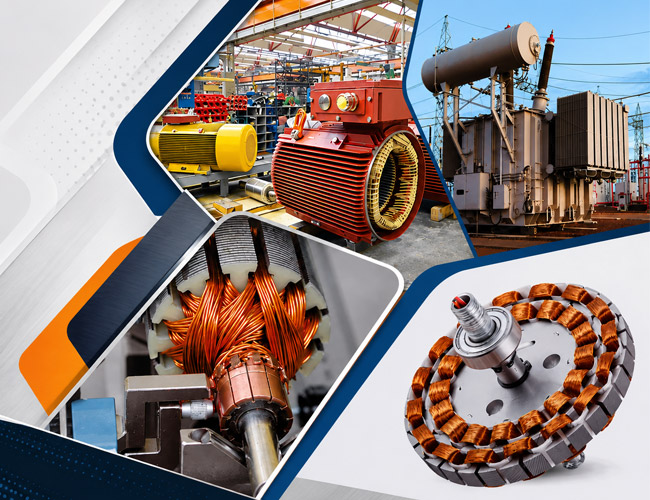
When a client is using our Baking Impregnating Varnish or Electrical Insulating Varnish on transformer coils, motor windings, or high-load electrical components, there's genuinely no room for inconsistency. A varnish that dries unevenly, or one with poor thermal resistance, can quietly compromise an entire electrical assembly — and that failure often shows up only after the equipment is already in service.
This is precisely the risk our lab testing is designed to eliminate. Every finished batch is verified for the properties that actually matter in the field: drying behaviour, adhesion strength, resistance to moisture and chemicals, and thermal stability appropriate to its insulation class, whether that's B-Class, F-Class, or H-Class.
A Quality Policy Built Around Long-Term Trust
Our approach to quality isn't just about passing internal tests — it's tied to a broader commitment. We aim to keep improving the scale, efficiency, and global competitiveness of what we manufacture, while making sure the people behind that manufacturing process are safe, supported, and genuinely invested in getting it right. Quality objectives get reviewed regularly, not left to sit static for years at a stretch.
There's also an environmental angle to this that often gets overlooked in industrial manufacturing. We take our responsibility toward the surrounding environment and community seriously, which shapes decisions in the lab and on the production floor alike — not just what goes into a formulation, but how responsibly it's produced.
Trusted by Demanding Clients
This level of testing rigor is part of why organizations like Tata, ONGC, NTPC, Indian Railways, Indian Navy, Coal India, HAL, and Polycab have relied on our varnishes and thinners for critical applications. When the end use involves defense equipment, power transmission, or heavy industrial machinery, there's simply no substitute for consistent, lab-verified quality — and that's the standard we hold every batch to, not just the ones destined for high-profile clients.
At the end of the day, quality control isn't a department that operates in isolation. It's woven into how we manufacture everything, from the first raw material check to the last finished drum rolling out for dispatch.