R&D
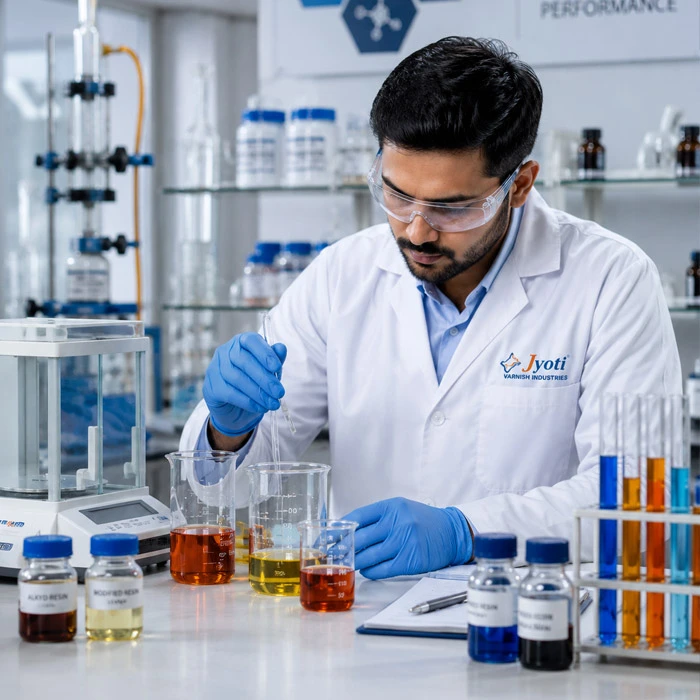
Research & Development
Formulating a varnish that performs well in a lab is one thing. Formulating one that still performs after three years on a live transformer coil in Gujarat's summer heat is an entirely different challenge. That gap is exactly where our Research & Development function earns its keep.
Two Kinds of Research, One Practical Goal
Not all research works the same way. Some of it is exploratory — building a fuller understanding of how a resin behaves, what a molecule is actually capable of, without a specific product attached to it yet. This kind of groundwork rarely gets attention, but it's what makes everything downstream possible.
The other kind is applied — research with a defined target, usually a new formulation, a modified process, or a solution to a specific customer requirement. It's slower and more resource-intensive than basic research, precisely because it has to account for real-world variables: application method, drying environment, load conditions, and long-term durability. Most of our day-to-day R&D work falls into this second category, simply because that's where client problems actually get solved.
Where Our R&D Focus Sits
Our core business has always cantered on electrical insulation, synthetic resins, varnishes, and composite materials, so naturally, that's where our R&D energy is concentrated too. Instead of approaching innovations as a distinct department pursuing separate discoveries, we always ensure the process of innovation remains closely tied to our client’s needs, whether it be the creation of a completely new molecule or the modification of an old one to suit a certain application.
This is a philosophy upon which the company was built – constant innovation that delivers value to the client's final product, not just for the sake of innovation itself.
Technical Competencies That Back This Up
Our R&D team works across a fairly wide technical range, including analysis of unknown resins, synthesis of new molecules, and formulation work involving epoxy resins and hardeners, polyesterimides, cyanate esters, and bismaleimides. We also apply structured methodologies like DoE (Design of Experiments), QFD (Quality Function Deployment), and FMEA (Failure Mode and Effects Analysis) to make sure new formulations are engineered systematically rather than through trial and error alone. Polyurethanes, PU hardeners, and epoxy reactive diluents round out the broader scope of our development work.
Lab-Scale Facilities Built for Real Testing
None of this works without the right infrastructure. Our lab is equipped for esterification and fractional column distillation, along with thin layer distillation processes that support fine-tuned resin development. We also run testing against IS and international standards, so formulations aren't just theoretically sound — they're verified against recognized benchmarks before they ever reach production scale.
For new formulations, we use pilot plant glass assembly setups to prepare lab batches before scaling up, which means issues get caught and corrected at a small, manageable scale rather than after a full production run has already happened.
Why This Matters to the Clients We Serve
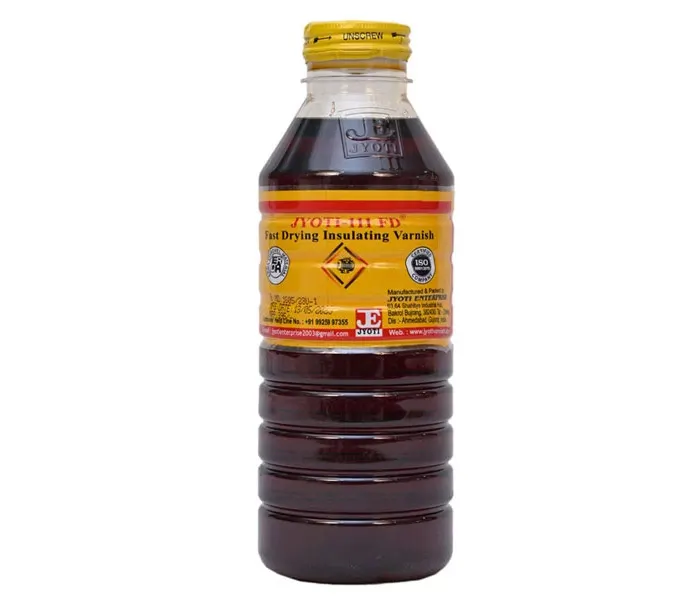
This R&D depth is part of why organizations across power, defense, railways, and heavy industry — including NTPC, Indian Railways, Indian Navy, Coal India, and HAL — continue to rely on our formulations for demanding applications. When a client's requirement doesn't fit neatly into an existing product, our R&D team is where that gap gets closed, whether through a new molecule or a reworked version of something we already know works.
At its core, this is less about chasing the next big innovation and more about making sure every varnish, resin, or hardener we manufacture actually does what it's supposed to, under the conditions it's actually going to face.